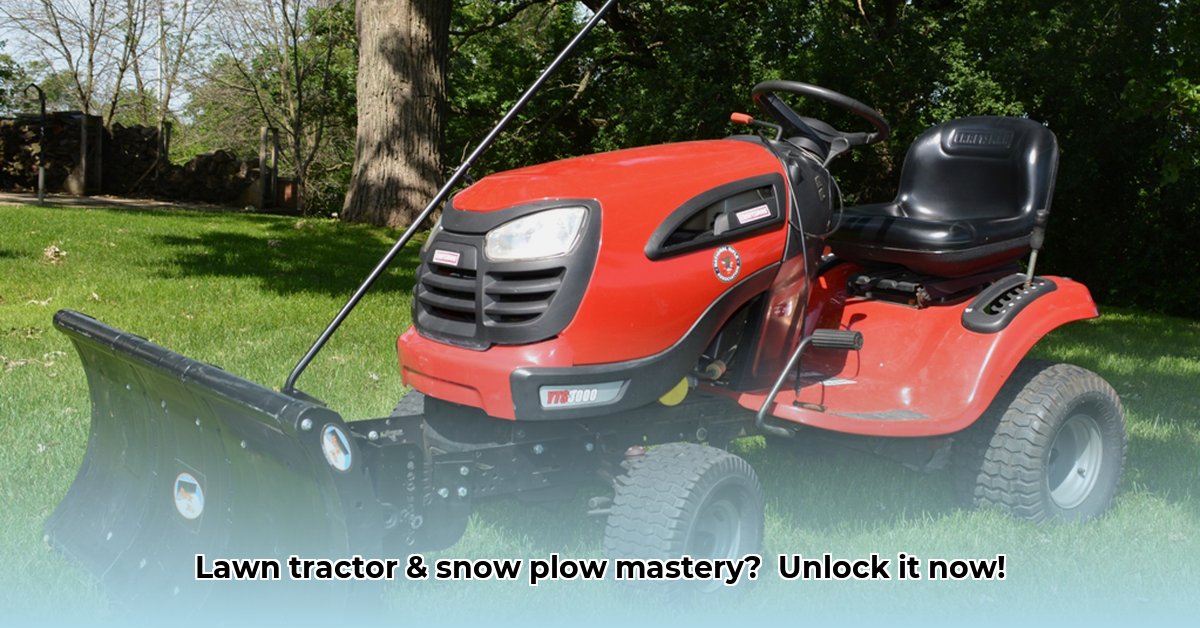
Lawn Tractor and Snow Plow: Your Winter Workhorse and Beyond
Transform your lawn tractor into a year-round powerhouse with the addition of a snow plow attachment. This guide provides the knowledge and steps to efficiently remove snow and extend your tractor's utility. Proper selection, installation, and maintenance are key to maximizing performance and longevity. For more on Kubota options, check out this helpful resource: Kubota snow blowers.
Choosing the Right Snow Plow for Your Tractor
Selecting the right snow plow is crucial for effective and safe snow removal. Consider factors like snowfall amount, driveway size, and your budget. A heavy-duty, hydraulic plow might be necessary for significant snowfall and larger areas, while a lighter-duty, manual plow suffices for smaller patios. Always consult your tractor's manual to determine the maximum safe weight capacity to prevent damage and accidents. Overloading your tractor is dangerous and can lead to costly repairs. Don't forget, a well-chosen plow can make the difference between effortless snow clearing and a backbreaking struggle. What type of plow best suits your needs and budget?
Hooking Up Your Snow Plow: A Step-by-Step Guide
Prioritize safety! Always ensure your tractor is off and the parking brake engaged before beginning any attachment procedures. Your tractor's manual contains model-specific instructions.
Preparation: Consult your tractor's manual for precise instructions. Typically, this involves aligning the plow's lift arms with the tractor's hitch points.
Secure Attachment: Connect the plow's mounting bracket to the lift arms, ensuring all pins and locking mechanisms are securely fastened. A loose connection is a major safety risk and performance issue.
Hydraulic Connection (If Applicable): For hydraulic lifts, connect the hoses to the designated ports, carefully checking for leaks. Hydraulic fluid leaks are safety hazards and require immediate attention.
Lift System Test: Start the engine and gently test the lift, raising and lowering the plow several times. Stop immediately if you hear unusual noises.
Clearance Check: Verify sufficient ground clearance for the plow blade to prevent scraping.
Snow Removal: Staying Safe and Efficient
Effective and safe snow removal requires more than simply driving around.
Obstacle Removal: Before starting, clear any rocks, debris, or other obstacles that might damage the plow or tractor. A small stone can cause significant damage to the blade.
Controlled Operation: Maintain a slow and steady pace, avoiding jerky movements and sharp turns to ensure control.
Overlapping Passes: Slightly overlap each pass to ensure complete snow removal.
Visibility: Use headlights, and exercise extra caution in snowy conditions to maintain visibility.
Regular Inspection: Regularly inspect your plow and tractor for wear and tear, following the manufacturer's maintenance recommendations. Preventative maintenance is time and money well spent. How frequently do you plan to check your equipment for damage?
Keeping Your Equipment in Tip-Top Shape: A Maintenance Plan
Regular maintenance extends the life of your snow plow attachment.
| Maintenance Task | Frequency | Tips |
|---|---|---|
| Inspect for Damage | After each use | Check the plow blade, mounting brackets, and hydraulic lines (if applicable). |
| Lubricate Moving Parts | As needed | Regularly lubricate hinges and moving parts. |
| Hydraulic System Check | Annually, or if problems occur | Inspect for leaks; consult a mechanic if needed. |
| Sharpen the Plow Blade | As needed | A sharp blade improves efficiency and reduces strain on your equipment. |
Troubleshooting: When Things Go Wrong
Consult your owner's manual for troubleshooting. Minor issues, like a slow lift (potentially low hydraulic fluid), may have simple solutions. For complex problems, seek professional assistance. Safety is paramount – avoid attempts at repairs beyond your capabilities.
Beyond Winter: Year-Round Versatility
Extend your tractor's usefulness beyond winter with attachments like tillers for spring gardening or fertilizer spreaders. This maximizes your investment and reduces the need for separate equipment. How might you leverage your tractor for year-round utility?
How to Choose the Best Lawn Tractor Snow Plow Attachment for My Needs
Choosing the right attachment requires careful consideration of compatibility, features, budget, and safety.
Key Takeaways:
- Compatibility between your lawn tractor and plow is essential for safe and effective snow removal.
- Evaluate blade width, adjustability, and material durability for optimal performance.
- Choose an attachment that matches your mechanical expertise for installation.
- Balance budget and features to find a suitable option.
- Prioritize safety during both installation and operation.
Understanding Compatibility: The Foundation of Success
Verify compatibility with your lawn tractor by consulting the owner's manual for horsepower and mounting system specifications. Ignoring these specifications can damage your equipment.
Blade Size and Adjustability: Efficiency and Control
Blade width impacts clearing efficiency; wider blades are faster but demand more powerful tractors. Adjustable angling allows precise snow piling and efficient pathway creation.
Material Matters: Durability and Weight
Steel blades are durable but heavier than plastic, impacting tractor requirements. Durable skid shoes protect your pavement and extend the plow's life.
Installation: A DIY Project or Professional Help?
Assess your mechanical skills. If unsure, professional installation is a worthwhile investment.
Budget vs. Features: Balancing Performance and Price
High-end models typically offer better features but cost more. Budget models are adequate for basic needs.
Enhancing Traction: Boosting Performance
Improved traction is crucial for snow removal. Adding rear-end weight or using tire chains can enhance grip on icy surfaces.
Safety First: A Non-Negotiable Aspect
Always read and fully understand the owner's manual before installation or operation. Wear appropriate safety gear (eye protection and gloves). Never exceed recommended operating speeds.
Choosing the Right Plow: A Step-by-Step Guide
- Compatibility Check: Verify your lawn tractor's specifications.
- Needs Assessment: Determine snowfall amounts and the area to be cleared.
- Feature Comparison: Evaluate blade width, adjustability, material, and installation ease.
- Budgeting: Establish a budget.
- Review Research: Consult user reviews.
- Purchase: Buy from a reputable retailer with a return policy.
- Safe Installation and Operation: Strictly follow manufacturer instructions.